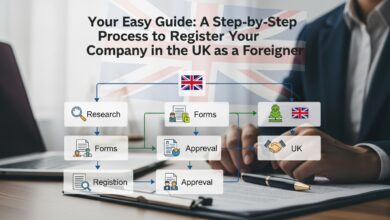
Your Go-To Guide: How to Start a Business in the UK as an Expat: A Complete 2025 Guide

So, you’re an expat with a brilliant business idea, and you’ve set your sights on the UK? Fantastic choice! The UK boasts a dynamic economy, a supportive ecosystem for entrepreneurs, and a diverse market. But embarking on this journey as a non-native can feel a bit daunting. Don’t sweat it! This complete 2025 guide will walk you through everything you need to know on How to Start a Business in the UK as an Expat: A Complete 2025 Guide, making the process as smooth as possible.
Navigating Visa and Immigration Requirements
The first hurdle for many expats is ensuring you have the right to work and establish a business in the UK. This is crucial, so let’s break down the main routes.





Which Visa is Right for You?
- Innovator Founder Visa: This is a fantastic option for experienced businesspeople seeking to establish an innovative, scalable, and viable business in the UK. You’ll need an endorsement from an approved endorsing body, and your business idea must be genuinely new, contribute to the UK economy, and have significant growth potential. It replaced the Start-up Visa in April 2023.
- Scale-up Visa: If you’ve been sponsored by a UK employer with a ‘Scale-up’ sponsor license and have worked for them for at least six months, this visa might be an avenue for you. It offers flexibility to switch to self-employment after a specific period.
- Global Talent Visa: If you’re a leader or potential leader in academia or research, arts and culture, or digital technology, this visa offers a path to establish your business with fewer restrictions on business activity.
Key Eligibility Criteria
Regardless of the visa type, you’ll generally need to demonstrate:
- Sufficient personal funds to support yourself.
- Proficiency in English.
- A robust and innovative business plan.
- An endorsement from an approved body (for Innovator Founder).

Choosing Your Business Structure
Once your visa situation is sorted, the next big decision is choosing the right legal structure for your business. Each has its pros and cons regarding liability, taxation, and administrative burden.
Sole Trader
This is the simplest structure, where you run your business as an individual. You are personally responsible for all business debts. It’s easy to set up and has minimal administrative requirements.
Limited Company (Ltd)
This separates your personal finances from your business finances, meaning your personal liability is limited to the amount invested in the company. It’s more complex to set up and administer but offers a professional image and potential tax advantages.
Partnership
If you’re going into business with one or more people, a partnership might be suitable. Partners share profits and losses, and typically have unlimited liability unless it’s a Limited Liability Partnership (LLP).
Registering Your Business in the UK
With your structure chosen, it’s time to make things official.
Companies House Registration
If you opt for a limited company or LLP, you must register it with Companies House. This involves choosing a unique company name, appointing directors and a company secretary (optional), and providing a registered office address in the UK.
HMRC Registration for Taxes
Regardless of your structure, you’ll need to register with HMRC (HM Revenue & Customs) for tax purposes. Sole traders register for self-assessment, while limited companies register for Corporation Tax.
Understanding the UK Tax System
The UK tax system can seem complex, but understanding the basics is key to good financial management for your expat business.
Corporation Tax
Limited companies pay Corporation Tax on their profits. The rate can change, so always check the current figures with HMRC or a professional accountant.
Income Tax and National Insurance
As a sole trader, you’ll pay Income Tax and National Insurance contributions on your profits through self-assessment. Directors of limited companies pay Income Tax and National Insurance on their salaries, and potentially tax on dividends.
VAT (Value Added Tax)
If your business’s turnover exceeds the VAT threshold (check current figures), you’ll need to register for VAT, charge it on your goods and services, and submit regular returns to HMRC.

Funding Your UK Venture
Securing funding is often a critical step for any new business. The UK offers several avenues:
Self-Funding
Using your personal savings is often the simplest way to start, giving you full control.
UK Bank Loans and Overdrafts
Once your business is registered and has a UK bank account, you can apply for traditional loans or overdraft facilities. Building a good business credit history will be vital.
Government Grants and Support
The UK government and various local authorities offer grants and support schemes, especially for innovative businesses or those in specific sectors. Researching these can provide a significant boost.
Angel Investors and Venture Capital
For high-growth potential businesses, seeking investment from angel investors or venture capital firms can provide substantial capital and mentorship.
Building Your Network and Support System
Don’t underestimate the power of connection. Joining local business groups, expat communities, and industry-specific networks can provide invaluable advice, potential clients, and emotional support.
Starting a business in the UK as an expat in 2025 is an exciting prospect with immense potential. While there are certainly steps to follow and regulations to understand, the UK’s welcoming business environment is designed to support ambitious entrepreneurs like you. Take your time, do your research, and don’t hesitate to seek professional advice from accountants, solicitors, and visa specialists. Good luck – the UK awaits your brilliant ideas!